2026-11-20 ·
How To Spot Early Foundation Cracks After Summer Heat And Monsoons
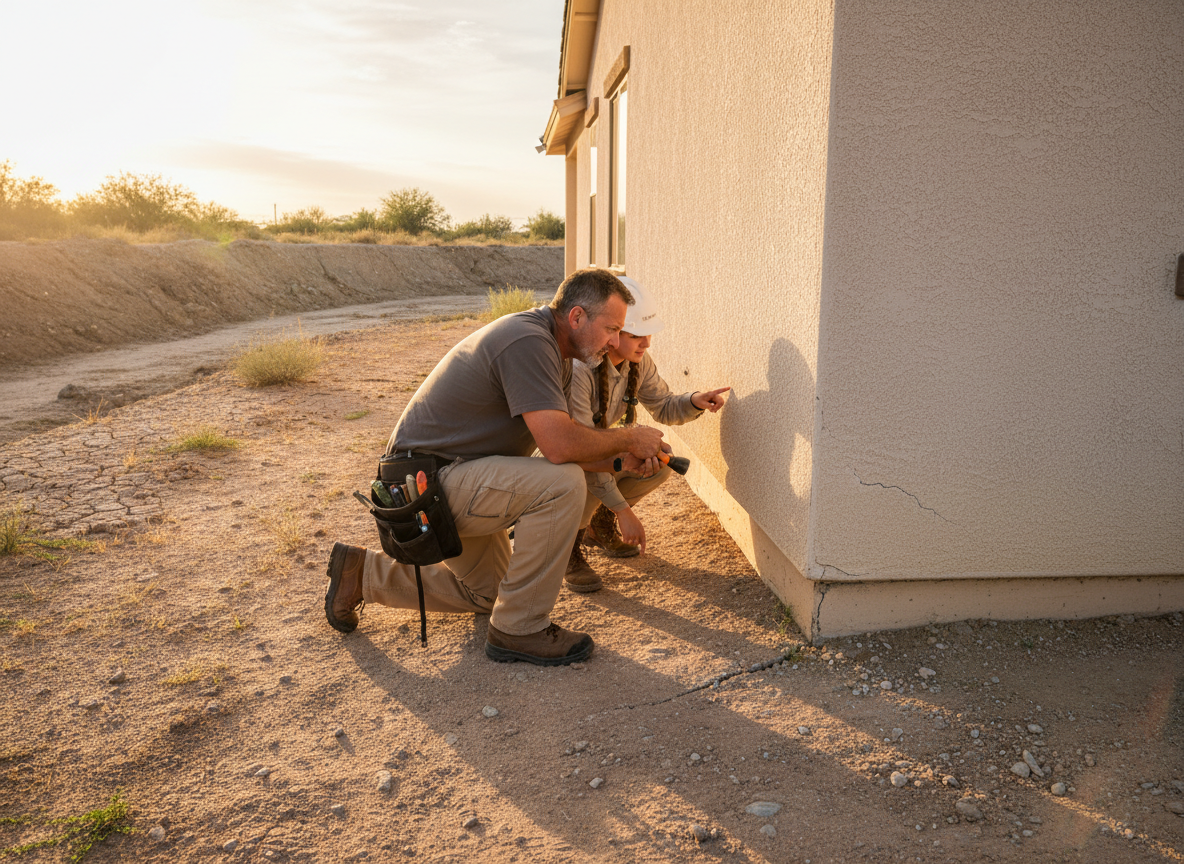
Foundation cracks after Gilbert summers and monsoons often start as hairline separations of 1/16 inch or less along the base of exterior walls or in garage floors within 30 days of the first heavy rains. These form because desert soils expand when saturated then shrink during 110-degree heat, stressing slab edges in Maricopa County homes built on native clay.
How Summer Heat Prepares the Soil for Cracking
Prolonged 100-plus degree stretches dry topsoil to depths of 18-24 inches across Downtown Gilbert and Layne Heights. This contraction pulls at the perimeter of concrete slabs, creating tension that monsoons later exploit. Homes in San Tan Ranch see the effect faster because of shallower fill dirt over caliche layers common in eastern Maricopa County. Check exposed soil along the foundation line for gaps wider than a pencil; those spots usually align with the first cracks that appear after rain.
Monsoon Patterns That Trigger Visible Damage
July and August storms deliver 1-2 inches of rain in under an hour on already compacted yards in Agritopia and Queen Creek. Water pools against stem walls when grading slopes inward, saturating the soil directly under the footing. Within two weeks, horizontal cracks 4-8 feet long often show at the transition between the slab and stem wall on the south and west sides of the house. Walk the perimeter after each storm and mark any new lines with tape so you can track whether they widen past 1/8 inch.
Where to Look First on Gilbert Homes
Begin at the garage slab because it lacks interior finishes and shows movement earliest. Next inspect the laundry room and any room additions added after original construction. In Power Ranch and Mesa-border homes, look for stair-step cracks in brick veneer starting at window corners; these usually mirror underlying slab movement. Measure crack width at the widest point and note whether one side sits higher than the other by more than 1/4 inch.
Tools and Checks That Reveal Hidden Issues
Use a 4-foot level and flashlight to check door frames for binding after the first monsoon. Doors that suddenly stick at the top corner often indicate the slab has tilted 1/2 inch or more. Shine the light along baseboards for separation from the floor; gaps larger than 1/8 inch on the south wall frequently correspond to soil heave under the edge. Photograph each location with a coin for scale so changes can be compared over the next 30 days.
If cracks exceed 1/4 inch or doors no longer close, contact a residential general contractor serving Gilbert for an on-site assessment. Homeowners in Chandler and Mesa often combine this inspection with drainage corrections before the next summer cycle begins.
Next Steps After Spotting Early Cracks
Document everything with dated photos and measurements before contacting StructCrest Group at 929 N Val Vista Dr Ste 109. Available 24/7, the team evaluates movement patterns specific to each neighborhood and explains repair sequencing that matches local soil behavior. Readers can also review Choosing Drought-Tolerant Landscaping That Works With New Construction In Gilbert for grading adjustments that reduce future water pressure against the foundation.